Showing posts with label 2012. Show all posts
Thursday, August 24, 2017
Flashback Friday 5 Stages of Analysis: Wilson Manages the Final Run of the Race and Uses Rahal’s Mistake to Take the Win at Texas
(Author’s Note: On this day two years ago, the Verizon IndyCar Series lost one of its most cheerful and talented competitors: Justin Wilson. Wilson, who was a three-time winner in IndyCar during his career, was making his sixth start of the 2015 season in the part-time #25 Honda for Andretti Autosport. The race was run at Pocono Raceway on Sunday, August 23rd and the British driver was poised to continue his momentum after he finished second at the Mid-Ohio Sports Car Course in the previous IndyCar event. Wilson was running in thirteenth at Pocono on lap 180 when the leader of the race, Sage Karam, broke loose in turn 1. Karam shot up the race track and slammed into the outside wall hard, which littered debris all over the racing surface. Drivers made contact with pieces of the debris and one of the carbon fiber parts hit the top of a racecar. The piece of carbon fiber shot at high speed towards IndyCars that were arriving on the scene. Tragically, the debris slammed into Wilson’s unprotected helmet and he immediately shot towards the inside wall at high-speed after losing consciousness due to the vicious blow. He slammed into the inside SAFER barrier and came to a stop as safety crews began to arrive on the scene. Wilson was unconscious as the medical teams arrived and he was extricated from his Honda. After being properly secured, he was airlifted to the Lehigh Valley Health Network Cedar Crest Hospital in Allentown, Pennsylvania, and he was listed in critical condition with major head trauma. He fought through Sunday night into Monday afternoon, but Justin Wilson succumbed to his injuries on Monday, August 24th after his unfortunate accident on track. Following his death, Wilson was remembered by IndyCar drivers and fans through merchandise sales and stories from the career of the affable British driver. Less than a year after his death, Wilson’s brother, Stefan, ran the 2016 Indianapolis 500 with the same number #25 in memory of his brother. He ended up finishing 28th after an electrical issue dropped him out of the event. Tragically, in the two years since Wilson’s accident, IndyCar has yet to mandate a safety innovation to protect driver’s heads in the cockpit, but they have worked to improve the safety of the racecars with a new body style for 2018. To honor Wilson and his achievements behind the wheel, we will be analyzing his final win in IndyCar, which came in the 2012 Firestone 550k at Texas Motor Speedway. Wilson managed to take his first career win that night on an oval as he returned Dale Coyne Racing to victory lane after a three-year winless streak. Let’s remember Wilson’s triumph as if the checkered flag just waved and honor one of IndyCar’s most beloved drivers.)
After Graham Rahal slammed into the outside wall in turn 4 with three laps to go, Justin Wilson passed his fellow competitor and led the final two laps to win his first career IZOD IndyCar Series oval race at Texas Motor Speedway. Wilson started the race in 16th position and managed to find himself in the right position at the end of the night thanks to strategy calls and an excellent Dale Coyne Racing Honda. However, throughout the night, contenders dropped out of the race due to crashes, mechanical issues, and penalties, which allowed new contenders to grab the top spot in search of a victory in the Lone Star State. Alex Tagliani started the race on the pole. He led through the first 20 laps of the race before Scott Dixon powered into the lead on lap 21 with his fast Chip Ganassi Racing Honda. From there, Dixon dominated the race through two cautions and two sets of yellow flag pit stops. He surrendered the lead for the first time during the first round of green flag pit stops of the race around lap 112, but when the pit stops cycled through after Wilson pitted on lap 125, Dixon found himself back out front. However, a caution five laps later allowed strategy to mix up the running order at the front of the field. James Hinchcliffe, Ed Carpenter, and Wilson stayed on track to inherit the Top 3 positions while Dixon pitted for four tires and fuel, which allowed him to restart in fourth. As soon as the green flag waved, Dixon used to his fresh tires to maneuver back to the front and he grabbed the lead from Hinchcliffe in turn 2 on lap 142. Again, the two-time IndyCar champion drove away from the field as he looked to win his second consecutive race in 2012. However, after 25 laps out front during the run, Dixon’s Honda began to handle much different than it did during the first half of the 550-kilometer event. On lap 171, Will Power took the lead from his fellow championship contender and Dixon began to slow significantly. Finally, on lap 173, his dominating night out front ended as he crashed hard in turn 4. His crash caused the fourth and final caution to wave in the event. The final yellow flag of the event led to the last pit stops of the race as Power returned to the lead. Yet, his time out front would be cut short as well. On the final restart of the race, Power battled hard with his teammate, Ryan Briscoe, through turns 1 and 2. Tony Kanaan, who was running third, tried to make it a three-wide battle on the backstretch, but Power blocked and the two drivers made slight contact. Kanaan was forced to pit and repair his front nose while Power was given a pass-through penalty by IndyCar officials for the block. Again, two contenders in the race fell out of the battle for the win as Briscoe inherited the lead. However, the Team Penske driver couldn’t hold the lead long as Graham Rahal took the top spot on lap 200. Over the next few laps, Rahal drove away as he pursued an elusive second victory in the IZOD IndyCar Series. As the final laps clicked by, the Ohio driver looked to be in control of the race and on pace for the win. However, as he exited turn 4 with three laps to go, he slid out of the groove and slammed into the outside wall. The contact caused him to slow down significantly and Wilson passed him heading down the backstretch with only two laps remaining. The British driver cruised to the checkered flag as he grabbed his third career IndyCar win in thrilling fashion. Throughout tonight’s race, IndyCar’s finest drivers competed at over 200 mph with a lower downforce package that made cars much harder to handle and made the racing more competitive. Plus, strategy and attrition constantly shifted the line-up, which allowed the lead to swap throughout the race. As these five stages of analysis show, Justin Wilson grabbed an unexpected win as IndyCar put on a thrilling race in front of thousands of fans at Texas Motor Speedway.
Stage 1:
Clutch Closer: Wilson Uses a Late Mistake by Rahal to Grab His First Oval Win at Texas
Since his first season in the IZOD IndyCar Series in 2008 after the series merged with the Champ Car World Series, Justin Wilson has been a proven contender at the front despite running with underfunded equipment. He won a race at Belle Isle in 2008 and he won Dale Coyne Racing’s first race in 2009 at Watkins Glen. In the last two years, though, Wilson has struggled to win and stay healthy. In 2010, he was unable to win a race for Dreyer & Reinbold Racing. Last year, while qualifying for IndyCar’s annual trip to Mid-Ohio, Wilson crashed and a broken bone in his back ended his season early. However, he returned to the series this year with Dale Coyne Racing and the British driver came back stronger as he pursued great runs for his team. Through the first six races of the season coming into tonight’s event at Texas, Wilson had three Top 10’s and a masterful seventh place finish in the Indianapolis 500 to his credit. He was determined to run well at Texas and prove he could win on ovals despite his lack of success on those tracks. Wilson started tonight’s 550-kilometer event in 16th, but he began his charge to the front as soon as the green flag waved with his fast Honda. By lap 25, he was sitting in 12th position with a shot and moving in the Top 10. The first caution waved on lap 30 for Charlie Kimball’s crash and the pit stops restarted his race to the front. Simon Pagenaud, who was pitting in the box just behind Wilson, entered his pit box and bumped into his tires, which were already sitting on the pit lane in typical fashion for IndyCar pit stops. The tires rolled into Wilson’s box slightly and he was unable to enter his stall for service. After Pagenaud’s team moved the tires, Wilson’s team performed their routine service and he returned to the track. Unfortunately, he lost four positions on pit road and he would need to regain the positions he surrendered in the pit road incident. Again, just as the green flag waved, he advanced through the field as he looked to rebound from the pit road miscue. When the second caution waved on lap 64, Wilson found himself back in the 12th spot after a strong run. He came back down pit road for the second time in the event and he returned to the race inside the Top 10 after a fast pit stop from his DCR crew. The race restarted and in the few laps after the green flag waved, Wilson moved into sixth position. He remained in sixth and seventh through most of the run before he began to gain positions thanks to saving his tires. On lap 103, he found himself in third with a shot at the lead. He moved into second a few laps later and green flag pit stops finally began on lap 112. After Scott Dixon, who was leading, pitted on lap 117, Wilson inherited the lead for the first time as he stayed on track longer than drivers around him. He finally came to pit road on lap 125 and ended the cycle of pit stops for the entire field. Wilson found himself in fifth after the stops just as the third caution waved on lap 130. Since the yellow flag came close to the end of green flag stops, the caution led to interesting strategies for drivers on the lead lap. Wilson stayed on track along with James Hinchcliffe and Ed Carpenter to move into third place. However, since drivers behind him had fresh tires, Wilson dropped on the subsequent run and found himself in seventh with about 70 laps to go. When the fourth caution waved on lap 173 for Scott Dixon’s crash, Wilson found himself in fifth position with pit stops looming. His Dale Coyne Racing team worked to perfection as they returned their driver to the track in the same spot. The green flag waved for the final time and Wilson gained two positions thanks to damage to Tony Kanaan’s car and a penalty for Will Power. Throughout the final run, he continued to gain on Ryan Briscoe for second as Graham Rahal led the event. Finally, Wilson passed Briscoe in turn 3 on lap 216 and set his sights on the leader. As the final laps clicked by, the British driver was catching his fellow competitor, but it appeared he would run out of time with less than five laps to go. However, he would have a fortunate break go his way with three laps to go. As Rahal exited turn 4, he drove out of the groove and slammed the outside wall. He attempted to drive away and maintain the lead, but he slowed down due to the damage. Wilson grabbed the lead in turn 2 with two laps to go and he cruised to the checkered flag for his third IndyCar Series victory and his first since Watkins Glen in 2009. Justin Wilson and his team were clutch in the final run of Firestone 550k at TMS, which allowed them to close on Rahal after his miscue and take a much-needed victory for the underdog organization.
Stage 2:
Memorable Moment: IndyCar’s New Generation of Cars Compete for the First Time on a High Banked Oval
While IndyCar has been running its new generation of cars for the first six races of the season thus far, tonight’s race was the ultimate test for the chassis aimed at advancing safety in the series. Unfortunately, the car, known as the DW12, was introduced for this season by Dallara and IndyCar after a tragedy at Las Vegas Motor Speedway in the final race of the 2011 season on October 16th. Dan Wheldon, who had just won the Indianapolis 500 five months prior to the season finale, entered the Las Vegas race with the chance to win five million dollars if he could start last and finish first in the event. Wheldon began his charge to the front in the early run of the race, but a huge crash began in turn 1 on lap 11 just ahead of him. He made contact with a car, which sent his #77 airborne and into the catchfence. Just a couple of hours after the massive accident, IndyCar announced that Wheldon had succumbed to his massive head injuries and the series lost one of its most affable competitors. In the wake of Wheldon’s death, IndyCar officials announced that they would be running a new Dallara racecar with advanced safety features among other new specifications. The chassis was named for Wheldon not only because of the crash, but because he had been testing the car for Dallara as they hoped to improve for the future. Coming into tonight’s race, the DW12 had competed at six events including the Indianapolis 500, but the 550-kilometer showdown at Texas was the ultimate test for the car. Texas is a potentially dangerous 1.5-mile track just like Las Vegas and IndyCar officials were hoping the improved safety features would prevent violent accidents. In addition to that, drivers and IndyCar executives met in Detroit last weekend and added new rules for tonight’s race to take downforce off the cars, which limited typical pack racing at fast ovals limited and put car control in the hands of drivers. Throughout the night, the car was tested at high speeds and it proved to be very successful. On lap 30, Charlie Kimball broke loose in turn 4 as he rode behind E.J. Viso. His car immediately spun up the race track and he slammed into the outside wall hard with the left side of his Chip Ganassi Racing Honda. Kimball slid all the way down the frontstretch and he came to a stop in the infield grass with heavy damage. However, he climbed out of his racecar without injury and the new safety components held up as expected despite the hard contact. 24 laps later, Takuma Sato broke loose exiting turn 2 and he slid down the backstretch towards the inside wall. He backed into the inside barrier with his right rear and came to a stop on track. Again, Sato climbed out of his damaged car safely as the DW12 accomplished its designated task of keeping drivers safe. Just over 100 laps later, Scott Dixon unfortunately tested the design of the car a final time. Dixon, who had been leading most of the race and had just fallen into second, broke loose in turn 3. At a much higher rate of speed than Kimball, he piled into the outside wall with the left side of his racecar. All the pods surrounding the cockpit on the left side were heavily damaged, but when he came to a stop on track, he climbed out of his Honda safely after a violent impact. For a third and final time, the Dallara DW12 met the expectations of IndyCar officials and drivers. While a safer racecar and competitive racing at 1.5-mile tracks can never bring Dan Wheldon back, tonight’s race proved that IndyCar can improve the safety of open wheel vehicles and sanction memorable races with the Dallara DW12 for years to come.
Stage 3:
Controversial Call: Power’s Blocking Penalty After Contact with Kanaan Costs Him the Win
In only three years of full-time competition in the IZOD IndyCar Series, Will Power has proven to be a perennial championship contender. In those three seasons, he won 12 races driving for KV Racing Technology in 2008 and Roger Penske for the past two seasons. After filling in admirably for Helio Castroneves in the first race of the 2009 season, he was given a part-time opportunity driving for Penske’s team and he won a race in Edmonton, Alberta, Canada. Despite injuring his back late in 2009 at Sonoma, Power was given a full-time ride for 2010 and has finished second in the championship fight the past two years. However, 2012 has already appeared to be more promising for the blossoming star than his previous years in the series. He won three consecutive races after finishing seventh in the season opener and he had only finished outside the Top 10 once in six races heading into Texas. Thanks to his consistency and stretch of victories, he came into tonight’s Texas shootout with the points lead. Plus, he won one of the Duel events in Texas last season and his team looked to add another victory at the 1.5-mile track in tonight’s event. Yet, his chances to win would be hampered by a controversial penalty late in the race. Power started the race in fifth and he gained a couple of positions through the first run. When the first caution waved on lap 30, he came down pit road and his team performed a quick stop as he returned to the track in third position for the restart. However, his tire changer didn’t tighten the lugnut on his right rear wheel, which meant Power would have a loose wheel when the race restarted. Rather than risk a crash when the green flag waved, Power’s team brought him back down pit road to tighten his right rear tire. The move was a safe call for the points leader, but it dropped him all the way to 19th for the subsequent restart. After dropping a spot when the green flag waved, the Australian moved back to the front and 100 laps after having a pit road mistake, Power found himself in fifth position for the restart after the third caution on lap 130. Plus, he was the second highest driver with fresh tires as the race dominator, Scott Dixon, rode in front of him. When the race restarted, Dixon quickly moved into the lead on lap 142 with Power passing drivers to move into second. The two competitors ran in the top two spots for many laps with Dixon maintaining the lead. However, the New Zealand driver’s car began to handle poorly after it performed strongly all race. Dixon’s problems allowed Power to take the lead on lap 171 after a thrilling comeback. Dixon ending up crashing two laps later to bring out the fourth and final caution as pit stops loomed for the leaders. Power maintained the lead during the pit stops and it appeared the Australian driver would be in position to take his second consecutive checkered flag at Texas. Unfortunately for Power, a controversial decision on track unraveled his race. When the green flag waved for the final time, Power battled hard into turn 1 with his Penske teammate, Ryan Briscoe, to his outside. The two drivers remained side by side through turn 2 with a hungry field of drivers behind them. Tony Kanaan, who had overcome his own problems after breaking a front wing during the first caution, was running in third and attempted to make a three-wide move for the lead heading down the backstretch. He shot to Power’s inside, but Power made a slight block and the two drivers made contact. The contact broke another front wing on Kanaan’s car and he came to pit road a couple of laps after the restart for repairs. Power, on the other hand, received no damage after the block and he managed to hold onto the lead with his teammate behind him. For Beaux Barfield, who is the race director for the IZOD IndyCar Series, it needed to be determined if the move from Power deserved a pass-through penalty or not. After a couple of laps, Barfield determined that the move was aggressive and Power was given a pass-through penalty on pit road as he led the event. Much to the chagrin of the entire team, Power brought his #12 down pit road on lap 195 and he returned to the race a lap down in eighth spot. Throughout the remainder of the event, he remained a lap down and the Australian driver brought his Chevrolet home in eighth position after a potential victory was snatched away by a penalty from the race director. While the slight block was obvious, Will Power and his team were left questioning the penalty and as the season progresses towards a championship decision in September, the loss of points could prevent the Australian driver from winning his first IndyCar title.
Stage 4:
Driver of the Night: Dixon’s Huge Crash Ends His Dominating Performance at Texas
Scott Dixon is a two-time champion in the IZOD IndyCar Series, but he proved last Sunday afternoon at Belle Isle that 2012 will be an excellent year for him and his Chip Ganassi Racing team. After starting on the pole at the street course near Detroit, Michigan, he led all 65 laps and grabbed the checkered flag after a dominating performance. The win vaulted him from fourth in the points to second with momentum early in the season. Tonight, Dixon continued his domination from Belle Isle in the first part of the event at Texas, but his chance for the win ended thanks to an ill-handling racecar and a massive crash. The New Zealand driver started the race in fourth position, but he didn’t remain there long. After overtaking second and third-place in the early laps of the event, Dixon passed polesitter, Alex Tagliani, for the lead on lap 21 in turn 1. From there, Dixon managed his absolute dominance of the event. He was leading when the first caution of the race waved on lap 30 and he returned to the track in the top spot after a spectacular stop from his Chip Ganassi Racing team. On the next run, he drove away from his fellow competitors as he set a torrid pace around TMS. When the second caution waved on lap 64, Dixon remained the leader and his pit stop was again flawless as he maintained the lead. The green flag waved after the caution and he continued to not only power away from the drivers in the positions around him, but he also lapped cars throughout the long run. When green flag pit stops arrived around lap 112, Dixon was one of the first drivers to come down pit road as he looked to maintain his advantage in the race. After 13 laps, the pit stops cycled through after Justin Wilson’s stop and Dixon returned to the lead with a blazing fast Honda. However, five laps after he returned to the lead, the third caution of the race waved for E.J. Viso’s stalled Chevrolet on the frontstretch. Since the caution came near the green flag stops, several teams utilized strategy calls to gain an advantage on Dixon and his team. James Hinchcliffe, Ed Carpenter, and Wilson stayed on track while Dixon and the rest of the lead lap drivers pitted for fresh Firestone rubber and Sunoco fuel. While he was in fourth for the subsequent restart, Dixon had fresh tires and he immediately began to use them. After overtaking Wilson and Carpenter in the first laps after the restart, he powered past Hinchcliffe on lap 142 in turn 2 to take the lead. Again, it looked like the New Zealand would drive away and continue his dominance from last weekend at Belle Isle. Yet, problems began to strike the driver and his CGR Honda. After leading for 25 laps during the run, his car began to handle poorly after performing to perfection throughout the first three quarters of the race. Dixon’s handling issues allowed Will Power to take the lead on lap 171 with ease. After losing the lead, Dixon’s speed per lap began to drop significantly as he tried to control his racecar. Finally, his handling problems brought his race to an end on lap 173. As he drove through turn 3 behind James Jakes, Dixon’s car broke loose and spun up the race track. He piled hard into the outside wall with the left-side of his Honda, which caused massive damage to the dominating racecar. His car came to a stop on track and he climbed out unhurt thanks to the safety advancements of the Dallara DW12, but his night was done early. After leading 133 of the first 173 laps, Dixon finished in a disappointing 18th place after a powerful run at Texas. Despite a dismal finish and a wrecked racecar, Scott Dixon proved tonight that with a good handling racecar and a chance to lead the race, he can win anywhere, which makes him a formidable threat for his third IndyCar title.
Stage 5:
Comeback of the Race: Pagenaud Overcomes Pass Through Penalty to Finish Sixth
In just six starts into his rookie season in the IZOD IndyCar Series, Simon Pagenaud has been impressive behind the wheel of his #77 for Schmidt-Hamilton Motorsports. He has already finished on the podium two times with a second-place finish on the streets of Long Beach, California, and a third-place finish last Sunday at Belle Isle. However, the Frenchman’s worst finish came in the Indianapolis 500 and Pagenaud had yet to compete on a 1.5-mile track before tonight’s event. Thanks to a comeback from a pit road miscue, the blooming star proved he could perform on another challenging race track. He started the race in ninth position and he maintained his spot in the Top 10 through the first run of the event. When the first caution of the race waved on lap 30, the rookie driver made his way down pit road with the rest of the field. His inexperience on pit road, though, cost him during the first pit stops of the race. In IndyCar, just before drivers come down pit road, each team sets all four tires where the driver will pull into the box. This move minimizes time and allows the driver to know exactly where to come to a stop within the stall. As Pagenaud entered his box just past lap 30, he didn’t drive between the tires like he was supposed to and he bumped into his right-side tires. Both tires rolled to the front of the team’s box and slowed Justin Wilson from being able to enter his box. Pagenaud’s team quickly gabbed the two tires and they performed routine service before sending their driver back to the track without any damage. Still, they lost a couple of positions and the miscue resulted in a penalty for hitting the equipment and preventing Wilson from entering his stall. When the race restarted, Pagenaud made a pass-through penalty on pit road and he lost a lap to the leaders, which relegated him to 19th position with a large deficit to overcome. Fortunately for Pagenaud and his team, the second caution waved on lap 64 and they stayed on track during the round of pit stops, which allowed them to return to the lead lap. The next run of the race turned out to be the longest of the 550-kilometer event and Scott Dixon’s blistering pace and green flag pit stops on lap 112 put Pagenaud back a lap down. However, thanks to attrition and mechanical failures, he continued to gain positions and he was sitting just outside the Top 10 despite being off the lead lap. The third caution waved on lap 130 to end the long run just as green flag pit stops had cycled through. Pagenaud was sitting around 11th position as the lead lap drivers came down pit road. Unfortunately for him, a few drivers remained on track and he was stuck the first car a lap down as the race entered the final 100 laps. In the next run of the event, Pagenaud maintained pace with the lead lap drivers, but he remained a lap down. As the run progressed, though, drivers that stayed out during the third caution came down pit road and Pagenaud gained positions since he was staying on the track. Finally, the fourth and final caution waved on lap 173 for Dixon’s crash with Pagenaud sitting in ninth position. During the caution, all the lead lap drivers came down pit road and Pagenaud’s team kept him on track. Because of that, he found his way back on the lead lap for the final run of the race. The green flag waved and Pagenaud began his charge from the eighth position on older tires. Fortunately for him, Power and Kanaan’s problems on the restart allowed him to move into sixth position. Since his tires were worn, Pagenaud remained in that position, but he gained valuable experience in a Top 10 spot. When the checkered flag waved after 228 laps, he brought his #77 Honda home in sixth position after a brilliant run in his first 1.5-mile race. Thanks to staying on track late and managing his fast Schmidt-Hamilton Motorsports Honda, Simon Pagenaud overcame a rookie miscue on pit road to earn his fifth Top 10 of 2012 in his first Texas race.
After 550 kilometers of action-packed and high-speed racing in Texas, the IZOD IndyCar Series heads to Wisconsin for 225 laps around the flat 1-mile oval known as the Milwaukee Mile. The track has been sanctioning auto racing events since 1903 and the likes of A.J. Foyt, Mario Andretti, Parnelli Jones, and Al Unser have competed around its tricky configuration. Next Saturday, though, the battle will be between the current stars of the IZOD IndyCar Series as they look to add a victory at the historic track. However, taking the checkered flag and going to victory lane will not be an easy task for the stacked field of drivers. The Milwaukee Mile features a single racing groove where drivers will need momentum to pass and sheer courage to advance positions. Plus, with the wide variety of racing backgrounds in the field, some drivers will be more adept at competing around the four-turn oval while others will struggle with mastering the one-mile track. Finally, as the season nears the halfway point for the entire IndyCar field, points will begin to become a factor as championship contenders will look to have an excellent points day as they battle around the historic track. In addition to the track storylines and the points picture heading into Wisconsin, several drivers are surrounded by stories heading into the 225-lap race. Justin Wilson may have just won his first oval race tonight, but the British driver will head to Milwaukee with confidence and a capable team to grab another victory on the season. Dario Franchitti struggled with the handling of his Chip Ganassi Racing Honda throughout tonight’s race at Texas, but the four-time and reigning IZOD IndyCar Series champion won last year at the Milwaukee Mile and he will be a threat on the one-mile track again this year. Scott Dixon’s dominating night ended in a crash tonight after he led 133 of 173 laps, but the New Zealand driver heads to Wisconsin where he previously grabbed the victory in 2009. Finally, Tony Kanaan’s comeback at Texas was cut short by contact with Will Power, but the two-time winner at the Milwaukee Mile will be poised to compete for a win next weekend in his KV Racing Technology Chevrolet. Tonight’s race at Texas featured an unexpected win from a fan favorite in Justin Wilson, heartbreak for Graham Rahal in the late laps, a controversial restart incident between Will Power and Tony Kanaan, several tests of the new Dallara DW12 racecar, and intense racing throughout the field under the lights in the Lone Star State.
(More Stats Down Below!)
Cautions:
1st Caution: Lap 30- Charlie Kimball broke loose riding behind E.J. Viso in turn 4. He spun up the track and slammed into the outside wall with the left side of his racecar, which ended his night.
2nd Caution: Lap 64- Takuma Sato broke loose exiting turn 2 and made slight contact with the outside wall, which caused him to spin down the backstretch. He backed into the inside wall with his right rear and his race ended after he was running in sixth.
3rd Caution: Lap 130- E.J. Viso had an engine problem on track and he came to a stop on the frontstretch near the exit of pit road.
4th Caution: Lap 173- Scott Dixon broke loose in turn 3 riding behind James Jakes. He spun up the race track and slammed into the outside wall hard with his left side. He came to a stop on track with heavy damage and his race was over after dominating the event.
Top 5 Finishers:
1st: Justin Wilson
2nd: Graham Rahal
3rd: Ryan Briscoe
4th: James Hinchcliffe
5th: J.R. Hildebrand
Notables Not in Top 5:
6th: Simon Pagenaud
7th: Helio Castroneves
8th: Will Power
11th: Tony Kanaan
13th: Josef Newgarden
14th: Dario Franchitti
17th: Marco Andretti
18th: Scott Dixon
21st: Ryan Hunter-Reay
22nd: Takuma Sato
23rd: Charlie Kimball
Credits:
-My Own Notes
-Statistics:
http://www.teampenske.com/drivers/index.cfm/3193/Will_Power
http://www.savethemile.org/history-of-the-mile.html
http://racing-reference.info/race/2012_Firestone_550/O
-Image:
http://jefflphoto.com/tag/fort-worth/
-Full Race:
https://www.youtube.com/watch?v=vGNzyNwojY4
Tuesday, October 16, 2012
The Passing of Dan Wheldon: One Year Ago Today
October 16, 2011. It started off as a simple Sunday for me. I woke up, ate breakfast, and then went to church. I came home at noon and sat down to eat. The race had been on Saturday night, so, instead, I watched some NFL games. Around 3 o'clock, I saw something on the bottomline about the IndyCar Series at Las Vegas Motor Speedway. I planned on watching the race, but I got sidetracked and forgot about it. Even though I was unable to catch the race, what happened in it forever changed my life.
The race started off normally with Marty Reid giving his introduction for the event. It was the last race of the 2011 season and the title was on the line. Dario Franchitti and Will Power were going for the championship and we were expecting a shootout from beginning to end. Dan Wheldon was also trying to win the race because he would receive 2.5 million dollars and one lucky fan would also receive 2.5 million dollars. The field contained 34 cars, which was an enormous amount for an IndyCar event. Even with drivers complaints of safety, the command was given and the engines were fired.
On the warm-up laps, Scott Goodyear, former IndyCar driver and announcer in the booth, talked to Dan Wheldon on the radio. Wheldon was confident in his ability to win the race. His team members and many others were as well. After this conversation, the green flag waved and the cars shot into turn 1. The cars were already three-wide by the time they reached turn 2 and the speeds continued to grow. In turn 3 on lap 10, an on-board shot of Dan Wheldon was shown and the mayhem began. As the cars went into turn 1, a flash of smoke popped up in front of Wheldon. Cars went sliding across the track and Dan, along with Will Power, J.R. Hildebrand, and others, went flying. Dan hit the catchfence and careened down across the track and onto the backstretch. Marty Reid, Scott Goodyear, and Eddie Cheever, the announcers in the booth, were alarmed by the magnitude of the incident. In total, 15 cars were involved. After some drivers were released from the medical center, they were interviewed along with some of the drivers left running. The ones released were keeping their thoughts with Dan Wheldon and the drivers still running were keeping their thoughts with all the drivers involved. Shortly after Dario Franchitti was interviewed, a medical helicopter was shown leaving the track, but nobody knew who was in it. A few minutes passed before Marty Reid went down to Jamie Little, who confirmed that Dan Wheldon was the driver who had been lifted by the helicopter. After a two hour red flag situation, Dan Wheldon was confirmed dead by IndyCar officials. Because of this, the drivers held a five lap salute to honor Wheldon. On that day in 2011, the life of Dan Wheldon ended right before our eyes.
When Dan Wheldon won the 2011 Indianapolis 500, I was ecstatic. He put a lot of hard work into it and deserved to win it. I was behind him then and wish that he was still alive to continue winning in the IndyCar Series. Looking back on the events of his career, I'm glad I am able to say that I watched Dan Wheldon race an IndyCar. Marty Reid ended that day perfectly. "People ask me why, when I sign off I say 'until we meet again'. Because goodbye is always so final. Goodbye Dan Wheldon."
Credits:
-Full Race:
http://www.youtube.com/watch?v=oAYIbAvKTdI&feature=my_liked_videos&list=LLoJuXstqkLuCW91eAlI6j5g
-Stats and Information:
indycar.com
Thursday, June 28, 2012
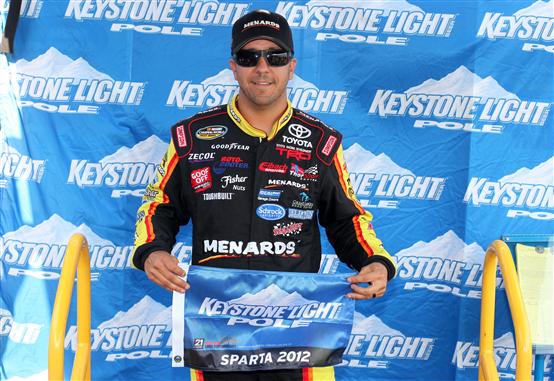
Matt Crafton Captures the Pole for the UNOH 225 at Kentucky
The first truck to go out on the track was Norm Benning, who was a go-or-go homer. He had a very difficult time with the track and was only able to grab a 34 and a half second lap. The first change in the qualifying order was with Chris Lafferty. He had engine troubles and the team decided not to run a lap and that meant, also, that he would not race because he was a go-or-go homer. The second change in qualifying order was with C.E. Falk. He wrecked in practice, which meant that they had to get a back-up car ready. He could not qualify in his scheduled spot, so he was the last car out. Justin Lofton probably had the most memorable run of the session. Coming into turn 2 on his second lap, Lofton got loose and spun in the corner, but he was able to make a great save and avoid the wall.
Matt Crafton went out with only 8 trucks left to qualify. He ran a pretty respectable first lap, but his second lap was the most memorable. He was able to gain almost 2 tenths of a second and run a time of 31.16 seconds (173.288 mph). That lap was a tenth of a second faster than the lap that Nelson Piquet Jr. ran to start second. With his first pole of the season, Matt Crafton will also look to grab his first win of the season.
(More Stats Down Below!)
Go-or-Go Homers (With Times and Positions):
17th: Brad Keselowski 31.86 (169.507 mph)
20th: Jake Crum 32.15 (167.989 mph)
21st:Clay Greenfield 32.26 (167.390 mph)
25th: Kyle Larson 32.41 (166.626 mph)
27th: Dennis Setzer 32.51 (166.093 mph)
30th: Jeff Agnew 32.63 (165.492 mph)
31st: Brennan Newberry 32.71 (165.097 mph)
32nd: Scott Riggs 32.72 (165.062 mph)
33rd: Caleb Holman 32.79 (164.674 mph)
34th: Tyler Young 33.00 (163.661 mph)
36th: Chris Fontaine 33.01 (163.587 mph)
37th: Jennifer Jo Cobb 33.19 (162.705 mph)
38th: Johnny Chapman 33.52 (161.122 mph)
39th: Norm Benning 34.55 (156.300 mph)
40th: Chris Lafferty No Time*
(*: Chris Lafferty did not attempt a qualifying run.)
Top 5 Qualifiers (With Times):
1st: Matt Crafton 31.16 (173.288 mph)
2nd: Nelson Piquet Jr. 31.29 (172.574 mph)
3rd: James Buescher 31.34 (172.326 mph)
4th: Ty Dillon 31.43 (171.816 mph)
5th: Miguel Paludo 31.45 (171.723 mph)
Notables Not in Top 5 (With Times):
6th: Johnny Sauter 31.47 (171.570 mph)
7th: Timothy Peters 31.48 (171.527 mph)
8th: Parker Kligerman 31.50 (171.439 mph)
10th: Justin Lofton 31.57 (171.048 mph)
11th: Ron Hornaday Jr. 31.69 (170.401 mph)
DNQs: Jennifer Jo Cobb, Johnny Chapman, Norm Benning, and Chris Lafferty
Credits:
-My Own Notes
-Statistics:
http://www.jayski.com/cts/next/2012/lineup/cts08kentucky-lineup.pdf
http://racing-reference.info/driver/Matt_Crafton
http://www.jayski.com/cts/next/2012/qualifying/cts08kentucky-order.pdf
-Photo:
http://www.ovalzone.com/tag/mexico-fest-200/#.T-3_k7We5IE
Sunday, June 24, 2012
Nelson Piquet Jr. Captures His First Career NASCAR Victory
After earning
his first career NASCAR Nationwide Series pole, Nelson Piquet Jr. was
able to capture his first win in NASCAR at Road America. After a
hard-fought 50 laps, he was able to stand tall with the Brazilian
flag in Victory Lane. It was not an easy victory at all. With all the
wrecks, all the surprises, and all the drivers being dumped in the
corners, this race was one for the books.
Nelson Piquet Jr. started on the pole for the Sargento 200. As usual at the road courses in the Nationwide Series, the qualifying rules were different than normal, but that did not bother Piquet as he won the pole. Piquet was able to lead the first two laps before being passed by Michael McDowell on the third lap. The oddest thing at the beginning of the race did not involve the racing.
Based on the qualifying rules, drivers could not put tires on their cars or refuel their cars after qualifying. Because of this, the majority of the drivers decided to stop in the first ten laps of the race. Ricky Stenhouse Jr. and Michael Annett pulled into pit road on lap 1, Sam Hornish Jr. pitted on lap 2, Jacques Villeneuve and Kurt Busch pitted on lap 4, and Michael McDowell, Nelson Piquet Jr., Max Papis, Elliott Sadler, and Austin Dillon pitted on lap 5. Those were the more notable drivers who pitted, but a vast majority of other drivers pitted before lap 10.
The first caution came out on lap 13 when T.J. Bell spun out in turn 14. Matthew Bell, who finished 34th, received the lucky dog. After a two lap green flag run, debris was spotted on the frontstretch on lap 18. This resulted in the second caution of the race. T.J. Bell, who brought out the first caution, received the lucky dog. After the longest green flag run of the race, 13 laps, Kenny Habul ran off track and hit the tire barrels in turn 5 on lap 32. Eric McClure, who was making his return to the series after a hard crash at Talladega in May, received the lucky dog. At this point in the race, most drivers felt that they could stop and go the rest of the way, but nobody knew for sure. Would anybody run out of fuel?
After one circuit around the road course, T.J. Bell went off track and got stuck in the gravel trap in “The Carousel” on lap 34. Kenny Habul, who brought out the third caution of the race, received the lucky dog. The fifth and final caution came out on lap 38 when Justin Allgaier ran off track in turn 5 because of a locked-up tire. Bill Prietzel, who finished 27th, received the final lucky dog of the race. This set up a 12 lap run to the finish that was filled with surprises, shocks, and very close calls.
With three laps to go, the race looked like it would finish under green, but John Young almost changed all that. As Young was driving along, he began to slow and realized that he had ran out of fuel. He had to coast the car across a straightway and make it to the turn 3 turnoff before the car completely stopped. He was able to make it and NASCAR did not have to throw a caution. The next incident shocked the NASCAR world.
On the final lap of the race, Jacques Villeneuve got into turn 5 hard and dumped Danica Patrick. Patrick slid off the racetrack and into the gravel trap. She was able to get the car going again, but the damage had already been done. Patrick went from a sure top 5 finish to a 12th place finish. It did not seem like a major loss, but Patrick is running for a championship unlike Villeneuve, who was running to win the race. Through all of these things, Nelson Piquet Jr. was able to get away and win the race. It was his first win in 3 starts in the NASCAR Nationwide Series. He also led 19 of the 50 laps, the most of the race.
To mention it once again, Nelson Piquet Jr. was able to earn the pole for and win the Sargento 200 at Road America. The NASCAR Nationwide Series heads to Kentucky next week for the Feed The Children 300. Tune in to ESPN 2 at 7:00 P.M. on June 29th for complete coverage of the race.
(More Stats Down Below!)
Cautions:
1st Caution: Lap 13- T.J. Bell spun out in turn 14.
2nd Caution: Lap 18- Debris was spotted on the frontstretch.
3rd Caution: Lap 32- Kenny Habul ran off track and hit the tire barrels in turn 5.
4th Caution: Lap 34- T.J. Bell went off track and got stuck in the gravel trap in “The Carousel”.
5th Caution: Lap 38- Justin Allgaier ran off track in turn 5 because of a locked-up tire.
Lucky Dogs:
1st Caution: Matthew Bell
2nd Caution: T.J. Bell
3rd Caution: Eric McClure
4th Caution: Kenny Habul
5th Caution: Bill Prietzel
Top 5 Finishers:
1st: Nelson Piquet Jr.
2nd: Michael McDowell
3rd: Ron Fellows
4th: Max Papis
5th: Sam Hornish Jr.
Notables Not in Top 5:
6th: Jacques Villeneuve
8th: Kurt Busch
11th: Ricky Stenhouse Jr.
12th: Danica Patrick
15th: Elliott Sadler
18th: Austin Dillon
Credits:
-My Own Notes
-Statistics: http://racing-reference.info/race/2012_Sargento_200/B
-Photo: http://www.nationwide.nascar.com/nationwide-series/news/120623/npiquetjr-wins-road-america/index.html
Saturday, June 23, 2012
Nelson Piquet Jr. Takes the Pole for the Sargento 200 at Road America

Nelson Piquet Jr. earned his first pole in the Nationwide Series at Road America. He beat the track record with a time of 2:13.07 (109.516 mph). With a few different qualifying rules, it was not an easy pole to gain, but Piquet is going to look for his first win to go along with the first pole of his career.
Like all road course races for the NASCAR Nationwide Series, the qualifying rules are way different. There are six groups of cars. The first group has 8 cars in it and the next five have six cars in them. The first cars to go out on the track are the slowest cars from practice and it continues on until the fastest cars from practice go out. Each driver also has a chance to run three laps to get the best time they can get, unlike ovals where the driver only gets two laps. The only similar thing is that each driver wants the fastest time and only one can get it. On this day, that was Nelson Piquet Jr.
Nelson Piquet Jr. went out in the last group of the day. He had to compete with the fastest drivers at the track to get the pole. He was able to do that with ease. The second place driver, Michael McDowell, was 3 tenths behind Piquet in time. After all was said and done, the last group swept the top 5 spots for the race, but other teams were left scratching their heads. Thanks to all of these things and more, the race should be one of the best of the year.
(More stats down below!)
Groups:
1st Group: Matt Frahm, Tim Schendel, Chase Miller, T.J. Bell*, Casey Roderick, Ryan Ellis, Jeff Green, and Kyle Kelley
2nd Group: Timmy Hill, Matthew Bell, Josh Richards, Bill Prietzel, Tony Raines, Morgan Shepherd, and Erik Darnell
3rd Group: Alex Kennedy, Matt DiBenedetto, John Young, Kenny Habul, Mike Wallace, Eric McClure, and Tayler Malsam
4th Group: Ricky Stenhouse Jr., Elliott Sadler, Mike Bliss, Jeremy Clements, Kurt Busch, Austin Dillon, and Victor Gonzalez Jr.
5th Group: Justin Allgaier, Brian Scott, Jason Bowles, Brad Sweet, Danica Patrick, Cole Whitt, and Michael Annett
6th Group: Jacques Villeneuve, Nelson Piquet Jr., Max Papis, Michael McDowell, Ron Fellows, Sam Hornish Jr., and Miguel Paludo
(*: T.J. Bell did not pass through inspection in time to make a qualifying run.)
Fastest Driver From Each Group:
1st Group: Kyle Kelley 2:16.73 (106.584 mph)
2nd Group: Timmy Hill 2:17.64 (105.875 mph)
3rd Group: Alex Kennedy 2:16.19 (107.000 mph)
4th Group: Ricky Stenhouse Jr. 2:14.70 (108.185 mph)
5th Group: Brian Scott 2:14.19 (108.596 mph)
6th Group: Nelson Piquet Jr. 2:13.07 (109.516 mph)
Top 5 Qualifiers (With Times):
1st: Nelson Piquet Jr. 2:13.07 (109.516 mph)
2nd: Michael McDowell 2:13.38 (109.258 mph)
3rd: Ron Fellows 2:13.64 (109.044 mph)
4th: Jacques Villeneuve 2:13.67 (109.020 mph)
5th: Miguel Paludo 2:13.80 (108.916 mph)
Notables Not in Top 5 (With Times):
10th: Danica Patrick 2:14.68 (108.207 mph)
11th: Ricky Stenhouse Jr. 2:14.70 (108.185 mph)
13th: Elliott Sadler 2:14.96 (107.977 mph)
22nd: Kurt Busch 2:16.82 (106.509 mph)
23rd: Austin Dillon 2:17.00 (106.368 mph)
DNQs: None
Credits:
-My Own Notes
-Statistics:
http://www.nationwide.nascar.com/nationwide-series/races/2012/qual_order/14/
http://www.jayski.com/nationwide/2012/pdfs/nns-14roadamerica2012lineup.pdf
-Photo:
http://www.nascarbrasil.net/wp-content/uploads/2012/06/nascar-brasil.jpg
Saturday, June 2, 2012
Todd Bodine Wins a Rain Shortened NCWTS Lucas Oil 200 at Dover
Todd Bodine was able to end a 37 race drought and win the Lucas Oil 200 at Dover. The race was shortened to 147 laps after rain began to move into the area. After he stayed out on a late race caution, Bodine was able to hold off drivers like Parker Kligerman, Nelson Piquet Jr., and the dominator of the race, Kevin Harvick, to pull off the victory. The race was filled with cautions and resulted in a mad dash to outwit Mother Nature.
Kevin Harvick started on the pole for the race and began to show his dominance early. After only a few laps, Harvick was able to jump out to a one second lead ahead of Johnny Sauter. On lap 13, the first caution came out due to Jason White blowing an engine coming into turn 1. Jennifer Jo Cobb, who finished 26th, received the lucky dog. After a six lap green flag run, the second caution of the evening came out. John Wes Townley spun out in turn 2, but received no damage. Norm Benning, who finished 25th, recived the lucky dog. On the first lap after the restart, the third caution of the race came out and it involved a total of 5 cars.
As the trucks came into turn 3, Jeb Burton got loose and spun Cale Gale. Gale was able to spin and receive no damage, but Burton backed into the wall and received a lot of damage. Parker Kligerman, who was trying to avoid the wreck, barely hit Burton as he passed by Burton's truck that was sliding across the outside wall. In front of those incidents, Brian Scott, who had made it through the wreck, was spun by Max Gresham, who could not see where he was going due to the smoke and cars trying to get by.. Neither driver received any damage and no driver received the lucky dog.
After the longest green flag run of the race, 36 laps, Todd Bodine got loose in turn 3 and spun out in turn 4 on lap 69. It was the fourth caution of the race. David Starr, who received two lucky dogs in the race, recived his first lucky dog of the race. After the second longest green flag run of the race, 24 laps, Ryan Sieg got loose coming out of turn 4 and hit the inside wall on the frontstretch on lap 97. It was the fifth caution of the race. David Starr, who finished 14th, received his secong lucky dog of the race. After a short eleven lap green flag run, Wes Burton got loose in turn 3 and spun out, resulting in a very hard hit into the inside wall on lap 112. It was the fifth caution of the race. John Wes Townley, who spun out earlier in the race, received the lucky dog. This caution led to the first red flag of the day.
On lap 120, NASCAR decided that the rain coming down at the track was too much for the trucks to continue racing. The first red flag of the race was waved and the pace car pulled the trucks onto pit road. The rain began to diminish and NASCAR told the drivers to put their helmets on. After about a ten minute delay, the trucks began to roll off of pit road. Some trucks decided to pit before the restart, but Todd Bodine, among other drivers, decided to stay out since they had newer tires on their trucks and more fuel. As Robert Frost said, “I have taken the road less traveled and it has made all the difference for me.” and for Todd Bodine and the other drivers, this reigned true.
When the green flag waved once again, trucks that had not been out front for the entire race were now in contention for the victory. After a short 5 lap green flag run, Max Gresham came out of turn 4 and slapped the outside wall on the frontstretch on lap 129. It was the seventh caution of the race. Paulie Harraka, who finished 17th, received the lucky dog. After a very short green flag run, 2 laps, Ron Hornaday got loose coming out of turn 2 and almost wrecked Justin Lofton, but Hornaday was able to avoid hitting Lofton and spin towards the inside wall and tap the wall, resulting in a crushed front end. It was the eighth caution of the race. Caleb Holman, who finished 18th, received the lucky dog. After the final green flag run of the race, rain began to fall on the racetrack on lap 144. It was the ninth caution of the race. NASCAR once again felt that the rain was too much for the drivers to continue racing.
The second red flag of the race was waved and the pace car once again pulled the cars onto pit road. The rain began to pour and NASCAR was forced to end the race after only 147 laps of the 200 laps. Todd Bodine was declared the winner of the race because he had stayed out after the first red flag and passed the rest of the cars that hadn't stopped either. Other drivers that stayed out and earned great finishes were Parker Kligerman, Nelson Piquet Jr., and Cale Gale. For Kevin Harvick, Mother Nature managed to rip a win out of his hands after he dominated the entire race.
Once again, Todd Bodine won the 2012 Lucas Oil 200 at Dover thanks to Mother Nature. He led 20 of the 147 laps, which was third to Justin Lofton's 22 laps led and Kevin Harvick's 96 laps led. It was his 22nd win in the NASCAR Camping World Truck Series, which is the 5th most all-time. The rest of the top 5 were Parker Kligerman in 2nd, Kevin Harvick in 3rd, Nelson Piquet Jr. in 4th, and Cale Gale in 5th. The Camping World Truck Series heads to Texas Motor Speedway next week for the seventh race of the season, the 2012 Winstar World Casino 400. Ron Hornaday Jr. won the 2011 Winstar World Casino 400 after Johnny Sauter was black-flagged on the final restart of the race. Will Hornaday be able to repeat, will a new driver win this season, or will Johnny Sauter get his revenge? Tune to SPEED on June 8th at 8:30 P.M. to see if these questions will be answered.
Credits:
-My own notes
-Statistics:
http://racing-reference.info/race/2012_Lucas_Oil_200/C
-Race Videos (Crashes and Finish):
http://www.youtube.com/user/mkwrockers0099/videos
-Todd Bodine Statistics:
http://racing-reference.info/driver/Todd_Bodine
-Photo:
http://www.nascar.com/news/120601/tbodine-wins-dover/index.html
Kevin Harvick started on the pole for the race and began to show his dominance early. After only a few laps, Harvick was able to jump out to a one second lead ahead of Johnny Sauter. On lap 13, the first caution came out due to Jason White blowing an engine coming into turn 1. Jennifer Jo Cobb, who finished 26th, received the lucky dog. After a six lap green flag run, the second caution of the evening came out. John Wes Townley spun out in turn 2, but received no damage. Norm Benning, who finished 25th, recived the lucky dog. On the first lap after the restart, the third caution of the race came out and it involved a total of 5 cars.
As the trucks came into turn 3, Jeb Burton got loose and spun Cale Gale. Gale was able to spin and receive no damage, but Burton backed into the wall and received a lot of damage. Parker Kligerman, who was trying to avoid the wreck, barely hit Burton as he passed by Burton's truck that was sliding across the outside wall. In front of those incidents, Brian Scott, who had made it through the wreck, was spun by Max Gresham, who could not see where he was going due to the smoke and cars trying to get by.. Neither driver received any damage and no driver received the lucky dog.
After the longest green flag run of the race, 36 laps, Todd Bodine got loose in turn 3 and spun out in turn 4 on lap 69. It was the fourth caution of the race. David Starr, who received two lucky dogs in the race, recived his first lucky dog of the race. After the second longest green flag run of the race, 24 laps, Ryan Sieg got loose coming out of turn 4 and hit the inside wall on the frontstretch on lap 97. It was the fifth caution of the race. David Starr, who finished 14th, received his secong lucky dog of the race. After a short eleven lap green flag run, Wes Burton got loose in turn 3 and spun out, resulting in a very hard hit into the inside wall on lap 112. It was the fifth caution of the race. John Wes Townley, who spun out earlier in the race, received the lucky dog. This caution led to the first red flag of the day.
On lap 120, NASCAR decided that the rain coming down at the track was too much for the trucks to continue racing. The first red flag of the race was waved and the pace car pulled the trucks onto pit road. The rain began to diminish and NASCAR told the drivers to put their helmets on. After about a ten minute delay, the trucks began to roll off of pit road. Some trucks decided to pit before the restart, but Todd Bodine, among other drivers, decided to stay out since they had newer tires on their trucks and more fuel. As Robert Frost said, “I have taken the road less traveled and it has made all the difference for me.” and for Todd Bodine and the other drivers, this reigned true.
When the green flag waved once again, trucks that had not been out front for the entire race were now in contention for the victory. After a short 5 lap green flag run, Max Gresham came out of turn 4 and slapped the outside wall on the frontstretch on lap 129. It was the seventh caution of the race. Paulie Harraka, who finished 17th, received the lucky dog. After a very short green flag run, 2 laps, Ron Hornaday got loose coming out of turn 2 and almost wrecked Justin Lofton, but Hornaday was able to avoid hitting Lofton and spin towards the inside wall and tap the wall, resulting in a crushed front end. It was the eighth caution of the race. Caleb Holman, who finished 18th, received the lucky dog. After the final green flag run of the race, rain began to fall on the racetrack on lap 144. It was the ninth caution of the race. NASCAR once again felt that the rain was too much for the drivers to continue racing.
The second red flag of the race was waved and the pace car once again pulled the cars onto pit road. The rain began to pour and NASCAR was forced to end the race after only 147 laps of the 200 laps. Todd Bodine was declared the winner of the race because he had stayed out after the first red flag and passed the rest of the cars that hadn't stopped either. Other drivers that stayed out and earned great finishes were Parker Kligerman, Nelson Piquet Jr., and Cale Gale. For Kevin Harvick, Mother Nature managed to rip a win out of his hands after he dominated the entire race.
Once again, Todd Bodine won the 2012 Lucas Oil 200 at Dover thanks to Mother Nature. He led 20 of the 147 laps, which was third to Justin Lofton's 22 laps led and Kevin Harvick's 96 laps led. It was his 22nd win in the NASCAR Camping World Truck Series, which is the 5th most all-time. The rest of the top 5 were Parker Kligerman in 2nd, Kevin Harvick in 3rd, Nelson Piquet Jr. in 4th, and Cale Gale in 5th. The Camping World Truck Series heads to Texas Motor Speedway next week for the seventh race of the season, the 2012 Winstar World Casino 400. Ron Hornaday Jr. won the 2011 Winstar World Casino 400 after Johnny Sauter was black-flagged on the final restart of the race. Will Hornaday be able to repeat, will a new driver win this season, or will Johnny Sauter get his revenge? Tune to SPEED on June 8th at 8:30 P.M. to see if these questions will be answered.
Credits:
-My own notes
-Statistics:
http://racing-reference.info/race/2012_Lucas_Oil_200/C
-Race Videos (Crashes and Finish):
http://www.youtube.com/user/mkwrockers0099/videos
-Todd Bodine Statistics:
http://racing-reference.info/driver/Todd_Bodine
-Photo:
http://www.nascar.com/news/120601/tbodine-wins-dover/index.html
Wednesday, May 9, 2012
Joey Logano Wins the NNS Aaron's 312 at Talladega Thanks To a Last Lap Pass
After two green-white-checkereds, a 9 car crash, a driver airlifted to the hospital, a last lap pass, and before a confrontation between two former open-wheel drivers, Joey Logano won the Aaron's 312 at Talladega Superspeedway. He passed Kyle Busch in the trioval on the last lap to win the race. In the end, the most memorable thing about this race might not even be the finish or who won.
Elliott Sadler started on the pole after qualifying was rained out. The race stayed green for the first 20 laps before the first caution came out on lap 21. Johanna Long's engine blew up and left oil on the track. No driver received the lucky dog. There was a short green flag run before the first of many large wrecks occurred on lap 29. Kurt Busch turned Brian Scott into Jason Bowles on the frontstretch. After Scott hit Bowles, he went hard into the outside wall. Other drivers involved were Morgan Shepherd, T.J. Bell, and Josh Richards. For the second caution in a row, no driver received the lucky dog. The longest green flag run of the race, 29 laps to be exact, began after the restart and ended with the third caution of the race on lap 63. The wreck began when Brad Sweet got loose in front of his drafting partner at the time, Mike Wallace, and went straight into the outside wall. While trying to avoid the wreck, John Wes Townley spun Eric McClure towards the inside wall, but McClure did not hit the wall. The other driver involved was Timmy Hill. Josh Richards, who was involved in the first wreck, received the lucky dog. A 15 lap green flag run ended on lap 81 when Josh Richards blew a tire in turn 2, causing him to spin out. This incident brought out the 4th caution of the race. During pit stops, a driver change occurred. Timmy Hill, who was suffering from an intestinal flu, was replaced by Blake Koch. John Wes Townley, who was involved in the third caution, received the lucky dog. Another long green flag run, 22 laps, ended on lap 110 when the 5th caution came out. Elliott Sadler, who had damage on the front of his car that was said to have caused the wreck, turned Mike Bliss in turn 3. Kurt Busch, who received two lucky dogs in the race, received the lucky dog. As the cars came around to complete the first lap after the restart, Mike Wallace got loose in turn 4 and tapped Danny Efland. Efland received no damage, but Mike Wallace had to retire from the race. Kurt Busch received his second lucky dog of the race. This led to the first of two green-white-checkereds and I will never, I mean never, forget what happened on the first green-white-checkered.
With 2 laps to go, the cars left in contention to win the race crusied down the backstretch looking for a drafting partner to pull off the victory. As they were nearing the end of the backstretch, Michael Annett got a run, but had nowhere to go. As Annett tried to find a lane, he made contact with Kevin Harvick and turned Harvick into Brad Keselowski. Keselowski went down the track into Annett and Austin Dillon while Harvick was hit hard by Tayler Malsam. Behind them, Elliott Sadler attempted to dodge Malsam, but he went down too far and turned Danica Patrick. The worst part of the wreck was when Kurt Busch tried to get into a lane to dodge Malsam and Harvick. When Busch went down, he hit Eric McClure and McClure went down on Jeffrey Earnhardt. Earnhardt turned McClure towards the wall and McClure flew into the wall with tremendous force. Earnhardt hit the wall as well, but not nearly as hard. Robert Richardson Jr., who was trying to avoid the wreck, hit Harvick on the driver's side and then Richardson ran into Jeffery Earnhardt. The only two drivers that appeared to be injured were Richardson and McClure. Richardson was able to get out of his car after a few minutes, but still looked shaken up. McClure had to be cut out of his car and was airlifted to a hospital in Birmingham, Alabama. As of the time this is posted, he was released with a concussion and mild internal bruising. After the wreck, there was a fifteen minute red flag that allowed the track crew to clean up the wreck and get McClure out of his car. Blake Koch, who had replaced Timmy Hill, received the lucky dog. The cars began rolling when the red flag was lifted and the final dash to the finish was set up.
The green flag came out once again and the cars barely kept it clean. As they were coming down the backstretch, Justin Allgaier turned Sam Hornish Jr into Joe Nemechek. They were able to save it, but Nemechek received a lot of damage. Because the cars had to slow down to avoid Nemechek, Kyle Busch, Joey Logano, Cole Whitt, and Ricky Stenhouse Jr were able to run away from the pack. The white flag waved and I, along with many others, were on the edge of their seat, wondering who would make the move to win the race. Cole Whitt, with Ricky Stenhouse Jr pushing, was not able to get a run to pass Kyle Busch, who was being pushed by Joey Logano, on the last lap to win the race. Joey Logano, on the other hand, was able to get a run on Kyle Busch and passed him in the trioval to win his 11th Nationwide Series race. In my opinion, it was probably one of the best finishes so far this year, but the race was far from being over.
Sam Hornish Jr, a former winner in the Nationwide Series, had a confrontation with Danica Patrick after the race. Hornish blew a tire in turn 4, but he could not slow down or get to pit road because he was still being pushed by Eliott Sadler. In the trioval, Danica Patrick attempted to pass Hornish, but couldn't and ran into him. Since Hornish had blown a tire, he couldn't turn his car and forced Patrick into the outside wall. Patrick didn't take too kindly to, in her mind, his actions. As they came into turn 1 for their cool-down lap, Patrick went in the corner hard and shoved Hornish into the wall. When both drivers made it to pit road, they patched things up and everything should be clean for the race at Darlington. Well, not really, but at least they can try.
Once again, in case it was undermentioned due to all the action in this race, Joey Logano won the race on a last lap pass over Kyle Busch. The Nationwide Series heads to Darlington next week where the action is sure to pick up. Coverage begins at 6:30 PM on ESPN2.
Credits:
-My own notes
-Caution Laps and Lucky Dog Winners:
http://www.racing-reference.info/race/2012_Aarons_312/B
-Eric McClure Crash Video:
http://www.nascar.com/video/post-race/highlights/120505/nns-tal-high-four/index.html
-Final Green-White-Checkered:
http://www.nascar.com/video/post-race/final-laps/120505/nns-tal-high-final/index.html
-Photo: http://www.al.com/sports/index.ssf/2012/05/joey_logano_passes_kyle_busch.html Sunday, April 15, 2012
Ricky Stenhouse Jr. Wins the NNS O'Reilly Auto Parts 300 at Texas
The race began with Paul Menard as the polesitter. He was able to lead the first three laps, but was passed by Ricky Stenhouse Jr on lap 4. Brad Keselowski had engine problems right before the caution on lap 48, but he was able to continue on in the race. The first caution came out on lap 48 for debris on the track in turn 1. Jason Bowles, who received two lucky dogs in the race, received the lucky dog. Paul Menard was able to win the race off pit road and led until the green flag came out. Kasey Kahne was able to lead a lap after the green flag came out, but Paul Menard was able to take the lead back. On lap 61, Brian Scott blew a motor, but no caution came out. On lap 91, Brad Keselowski spun coming off turn 4 and brought out the second caution. Jason Bowles, who finished 18th, received his second lucky dog of the race. The green flag came out on lap 95 and immediately on the backstretch, Blake Koch was turned by Kurt Busch and Koch hit the inside wall. This resulted in the third caution of the race. Mike Bliss, who finished 16th, received the lucky dog. A 59 lap green flag run began after the caution and the only round of green flag pit stops during the race began on lap 146. Shortly after the green flag stops, on lap 163 to be exact, the lights on the backstretch blew out. It resulted in the 4th caution and a short red flag. Austin Dillon stayed out and gained the lead and led 13 laps in the process. Danica Patrick, who finished 8th, received the lucky dog. The caution came out again on lap 189 when Kurt Busch blew an engine and left oil on the track. It was the fifth and final caution of the evening. Joey Logano, who finished 15th, received the lucky dog. The restart came with six laps to go and Ricky Stenhouse Jr was able to hold off Denny Hamlin and Paul Menard to cruise to his second victory of the year.
Stenhouse was able to lead a total of 68 laps. Paul Menard led the most laps with 100 and finished second. The rest of the top 5 were Kasey Kahne in 3rd, Denny Hamlin in 4th, and Austin Dillon in 5th. David Ragan was able to finish sixth with GC Motorsports, an underfunded team out off Ontario, Canada. Elliott Sadler, who finished 12th, still held the points lead by 4 points over Stenhouse. The NASCAR Nationwide Series will take another week off and then head to Richmond on April 27th where the action is sure to heat up.
Credits:
-Statistics: http://www.racing-reference.info/race/2012_OReilly_Auto_Parts_300/B
-Picture: http://www.nascar.com/nationwide-series/news/120413/rstenhousejr-wins-texas/index.html
Friday, April 13, 2012
Finally, The Rock Has Come Back To... NASCAR?
"Can you smell what The Rock is cooking?" has turned into "Can you believe The Rock is coming back to NASCAR?" Since 2004, Rockingham Speedway, better know as "The Rock", has been away from the top three series of NASCAR. Throughout its absence, Rockingham Speedway has been waiting for a comeback to bring it back to its former glory that began in 1965.
Opened on October 31st, 1965, North Carolina Motor Speedway was built by history. It was the project of Harold Brasington, a land developer who built Darlington Raceway, and Bill Land, who owned the land that the speedway was built on. The track was built as a 1 mile oval, but, over time, it became a 1.017 mile speedway. Most of the funding for the track was provided by a local lawyer named Elsie Webb, who gathered a group of backers to back the track with funding. Brasington and Land also sold 1 dollar shares and they had about 1,000 shareholders at a certain time.
The first race was held on October 31st, 1965 and had an attendance of 35,000. The American 500, which was the name of the race, was a 500 lap, 500 mile race. It was also the 54th race of the 55 race 1965 season. Curtis Turner, who led 239 laps, won the race. The race included NASCAR legends like Cale Yarborough, Ned Jarrett, Buddy Baker, David Pearson, Junior Johnson, and Richard Petty. In 1966, the speedway was given two dates and that tradition continued until 2004.
The demise of North Carolina Motor Speedway began in 1997. North Carolina Motor Speedway merged with Penske Motorsports and was renamed North Carolina Speedway. In 1999, North Carolina Speedway was sold to International Speedway Corporation, or ISC. After 38 years of having two races, North Carolina Speedway was only given one date in 2004. Some people believed that it was due to low attendance, but most people believed it was due to ISC giving it to a newer track that they felt would be better fit for NASCAR racing. NASCAR's best wanted to make the only race at North Carolina Speedway a one to remember. Boy, did they ever.
The 2004 Subway 400 was full of surprises and controversy. The major surprise in the race occurred on lap 265. As the cars were coming down the backstretch, Brendan Gaughan bumped Joe Nemechek, which caused Nemechek to turn Carl Long into the wall. Long then began to flip wildly along the backstretch and flipped 5 or 6 times before landing on his wheels. Long was okay after the crash. The controversy began on lap 350. Matt Kenseth, who was in the lead, pulled into the pits with second place at the time, Kasey Kahne, on lap 350. Jamie McMurray, who was in third, stayed out and took the lead. As Jamie McMurray went down the backstretch and into turn 3, Robby Gordon got loose coming out of turn 2 and went up into Jeff Green. Gordon got on his side, but didn't flip. Jamie McMurray inherited the lead and Matt Kenseth and Kasey Kahne were in trouble. Well, the actually weren't.
When Matt Kenseth and Kasey Kahne came out of the pits, NASCAR ruled that they were still on the lead lap. According to NASCAR, Kahne and Kenseth had, and I quote, "completed routine stops." McMurray and his owner, Chip Ganassi, could not believe what NASCAR had said. After pit road was opened, all the lead lap cars in front of Kahne and Kenseth pitted. It gave Kenseth the lead and Kahne second. McMurray came out of the pits first and assumed third place, but he was not happy.
The restart came out with thirty laps to go and the controversy still wasn't finished. On the restart, Mark Martin, who was Kenseth's teammate and two laps down at the time, let Kenseth by and slid up in front of Kahne. After the race, Martin said that he thought he was "racing and wasn't in anybody's way." Eventually, Kahne and McMurray got by Martin and chased down Kenseth. On the last lap, Matt Kenseth decided to block the outside line, Kahne's preferred line. Kahne used the bottom and coming out of turns 3 and 4, Kahne was able to inch closer to Kenseth. At the line, the margin of victory was .01 second with Kenseth pulling out the win. With arguably one of the best finishes in NASCAR history, North Carolina Speedway went out with a bang.
After three and a half years without any type of action whatsoever, North Carolina Speedway was put up for sale on October 2nd, 2007. Andy Hillenburg, a car owner in the ARCA RE/MAX Racing Series, bought the track for 4.4 million dollars. Immediately after he bought it, he gathered some sanctioning bodies to set dates for the speedway and changed the official name of the track to Rockingham Speedway. They also set up a 2008 ARCA RE/MAX Series date for May 4th. The event was named the Carolina 500 and it featured a field of fifty cars. Joey Logano, an up and coming NASCAR driver, won the pole for the race, dominated the race, lead the most laps, and passed Ken Schrader with 5 laps to go to win the race. After that race, Rockingham held two ARCA Series races until the series left the track after the 2010 season. Rockingham also held series such as the UARA and CARS Series.
After 7 years without a NASCAR event, ESPN released a story on September 2nd, 2011 that Rockingham Speedway would receive a date in the 2012 Camping World Truck Series schedule. On September 7th, 2011, Andy Hillenburg held a press conference that confirmed Rockingham had received a Camping World Truck Series date for April 15th, 2012. Finally, after years of turmoil, NASCAR returns to "The Rock."
Throughout its history, Rockingham Speedway has had to overcome lows and become glorified during the highs. When the Camping World Truck Series comes in 2012, veterans like Kasey Kahne, Todd Bodine, Ron Hornaday Jr. and rookies like Tyler Young, Brennan Newberry, and Caleb Holman will attempt to bring Rockingham back to its former glory. I have no doubts that they will do that and some. Boy, its going to be a good show.
Credits:
-History:
http://www.nascar.com/news/120405/maumann-retro-kkahne-mkenseth-rockingham-2004/index.html
http://premium.nascar.com/TRACKS/northcarolina/
-Statistics:
http://www.racing-reference.info/race/2004_Subway_400/W
http://www.racing-reference.info/race/1965_American_500/W
-Video of Gordon crash(Used to determine NASCAR's ruling):
http://www.youtube.com/watch?v=mzMtAgYofTI
-Picture:
http://a.espncdn.com/media/motion/2012/0410/dm_120410_nascar_rockingham.jpg
Opened on October 31st, 1965, North Carolina Motor Speedway was built by history. It was the project of Harold Brasington, a land developer who built Darlington Raceway, and Bill Land, who owned the land that the speedway was built on. The track was built as a 1 mile oval, but, over time, it became a 1.017 mile speedway. Most of the funding for the track was provided by a local lawyer named Elsie Webb, who gathered a group of backers to back the track with funding. Brasington and Land also sold 1 dollar shares and they had about 1,000 shareholders at a certain time.
The first race was held on October 31st, 1965 and had an attendance of 35,000. The American 500, which was the name of the race, was a 500 lap, 500 mile race. It was also the 54th race of the 55 race 1965 season. Curtis Turner, who led 239 laps, won the race. The race included NASCAR legends like Cale Yarborough, Ned Jarrett, Buddy Baker, David Pearson, Junior Johnson, and Richard Petty. In 1966, the speedway was given two dates and that tradition continued until 2004.
The demise of North Carolina Motor Speedway began in 1997. North Carolina Motor Speedway merged with Penske Motorsports and was renamed North Carolina Speedway. In 1999, North Carolina Speedway was sold to International Speedway Corporation, or ISC. After 38 years of having two races, North Carolina Speedway was only given one date in 2004. Some people believed that it was due to low attendance, but most people believed it was due to ISC giving it to a newer track that they felt would be better fit for NASCAR racing. NASCAR's best wanted to make the only race at North Carolina Speedway a one to remember. Boy, did they ever.
The 2004 Subway 400 was full of surprises and controversy. The major surprise in the race occurred on lap 265. As the cars were coming down the backstretch, Brendan Gaughan bumped Joe Nemechek, which caused Nemechek to turn Carl Long into the wall. Long then began to flip wildly along the backstretch and flipped 5 or 6 times before landing on his wheels. Long was okay after the crash. The controversy began on lap 350. Matt Kenseth, who was in the lead, pulled into the pits with second place at the time, Kasey Kahne, on lap 350. Jamie McMurray, who was in third, stayed out and took the lead. As Jamie McMurray went down the backstretch and into turn 3, Robby Gordon got loose coming out of turn 2 and went up into Jeff Green. Gordon got on his side, but didn't flip. Jamie McMurray inherited the lead and Matt Kenseth and Kasey Kahne were in trouble. Well, the actually weren't.
When Matt Kenseth and Kasey Kahne came out of the pits, NASCAR ruled that they were still on the lead lap. According to NASCAR, Kahne and Kenseth had, and I quote, "completed routine stops." McMurray and his owner, Chip Ganassi, could not believe what NASCAR had said. After pit road was opened, all the lead lap cars in front of Kahne and Kenseth pitted. It gave Kenseth the lead and Kahne second. McMurray came out of the pits first and assumed third place, but he was not happy.
The restart came out with thirty laps to go and the controversy still wasn't finished. On the restart, Mark Martin, who was Kenseth's teammate and two laps down at the time, let Kenseth by and slid up in front of Kahne. After the race, Martin said that he thought he was "racing and wasn't in anybody's way." Eventually, Kahne and McMurray got by Martin and chased down Kenseth. On the last lap, Matt Kenseth decided to block the outside line, Kahne's preferred line. Kahne used the bottom and coming out of turns 3 and 4, Kahne was able to inch closer to Kenseth. At the line, the margin of victory was .01 second with Kenseth pulling out the win. With arguably one of the best finishes in NASCAR history, North Carolina Speedway went out with a bang.
After three and a half years without any type of action whatsoever, North Carolina Speedway was put up for sale on October 2nd, 2007. Andy Hillenburg, a car owner in the ARCA RE/MAX Racing Series, bought the track for 4.4 million dollars. Immediately after he bought it, he gathered some sanctioning bodies to set dates for the speedway and changed the official name of the track to Rockingham Speedway. They also set up a 2008 ARCA RE/MAX Series date for May 4th. The event was named the Carolina 500 and it featured a field of fifty cars. Joey Logano, an up and coming NASCAR driver, won the pole for the race, dominated the race, lead the most laps, and passed Ken Schrader with 5 laps to go to win the race. After that race, Rockingham held two ARCA Series races until the series left the track after the 2010 season. Rockingham also held series such as the UARA and CARS Series.
After 7 years without a NASCAR event, ESPN released a story on September 2nd, 2011 that Rockingham Speedway would receive a date in the 2012 Camping World Truck Series schedule. On September 7th, 2011, Andy Hillenburg held a press conference that confirmed Rockingham had received a Camping World Truck Series date for April 15th, 2012. Finally, after years of turmoil, NASCAR returns to "The Rock."
Throughout its history, Rockingham Speedway has had to overcome lows and become glorified during the highs. When the Camping World Truck Series comes in 2012, veterans like Kasey Kahne, Todd Bodine, Ron Hornaday Jr. and rookies like Tyler Young, Brennan Newberry, and Caleb Holman will attempt to bring Rockingham back to its former glory. I have no doubts that they will do that and some. Boy, its going to be a good show.
Credits:
-History:
http://www.nascar.com/news/120405/maumann-retro-kkahne-mkenseth-rockingham-2004/index.html
http://premium.nascar.com/TRACKS/northcarolina/
-Statistics:
http://www.racing-reference.info/race/2004_Subway_400/W
http://www.racing-reference.info/race/1965_American_500/W
-Video of Gordon crash(Used to determine NASCAR's ruling):
http://www.youtube.com/watch?v=mzMtAgYofTI
-Picture:
http://a.espncdn.com/media/motion/2012/0410/dm_120410_nascar_rockingham.jpg
Thursday, April 5, 2012
Kevin Harvick Dominates In the NCWTS Kroger 250 at Martinsville
After qualifying on the pole, Kevin Harvick dominated the Kroger 250 at Martinsville. He led 248 of the 250 laps, but not without a challenge from rookie driver, Ty Dillon. The race was not without its share of surprises and thrills.
On Lap 22, Ron Hornaday spun out on the frontstretch bringing out the first caution. Jake Crum, who finished 18th, received the lucky dog. After a stretch of about 50 green flag laps, Joey Coulter blew a right front tire and slammed hard into the turn 3 wall bringing out the second caution. John King, the first time winner from Daytona, received the lucky dog. After a short stretch of 11 green flag laps, John Wes Townley got loose in turn 3 and bumped into J.R. Fitzpatrick, causing him to spin. Clay Greenfield had to check up to avoid the wreck, which caused Dakoda Armstrong to run into the back of him and caused Jeff Agnew to run into the back of Armstrong. This accident brought out the third caution. Ryan Sieg, who finished 32nd, recevied the lucky dog. After another short green flag run, twelve laps to be exact, Dusty Davis stalled his truck on the frontstretch. Matt Crafton, who finished 24th, received the lucky dog. After a 37 lap green flag run, David Starr spun in turn 2. Ron Hornaday, who caused the first caution, received the lucky dog. After the longest green flag run, 63 laps, David Reutimann wrecked in turn 1. Oddly enough, he caused a caution in the Sprint Cup Series race for stalling out on the track due to two blown tires. J.R. Fitzpatrick, who was also involved in a wreck, received the lucky dog. On the restart, the trucks became stacked up in turn 3. Miguel Paludo got loose and bumped into Max Gresham, causing him to spin out. John King, who was behind the two, had to slow down and that caused Parker Kligerman to run into the back of King. David Starr was able to slow down and avoid Kligerman, but Brennan Newberry ran into the back of Starr. David Starr, who got hit in the back during the accident, received the last lucky dog of the race. The final dash to the checkers was set.
With Kevin Harvick starting on the outside, the green flag came out with six laps to go. Kevin Harvick was able to secure his lead coming into turn 1 and he never looked back. It was his 14th win the Camping World Truck Series and it was his 3rd at Martinsville.
Ty Dillon was able to come home in second in front of James Buescher in 3rd, Justin Lofton in 4th, and Timothy Peters in 5th. John King still held the points lead after the race.
Credits:
-Statistics: http://www.racing-reference.info/race/2012_Kroger_250/C
-Photo: http://www.nascar.com/news/120331/kharvick-win-martinsville-truck/index.html
On Lap 22, Ron Hornaday spun out on the frontstretch bringing out the first caution. Jake Crum, who finished 18th, received the lucky dog. After a stretch of about 50 green flag laps, Joey Coulter blew a right front tire and slammed hard into the turn 3 wall bringing out the second caution. John King, the first time winner from Daytona, received the lucky dog. After a short stretch of 11 green flag laps, John Wes Townley got loose in turn 3 and bumped into J.R. Fitzpatrick, causing him to spin. Clay Greenfield had to check up to avoid the wreck, which caused Dakoda Armstrong to run into the back of him and caused Jeff Agnew to run into the back of Armstrong. This accident brought out the third caution. Ryan Sieg, who finished 32nd, recevied the lucky dog. After another short green flag run, twelve laps to be exact, Dusty Davis stalled his truck on the frontstretch. Matt Crafton, who finished 24th, received the lucky dog. After a 37 lap green flag run, David Starr spun in turn 2. Ron Hornaday, who caused the first caution, received the lucky dog. After the longest green flag run, 63 laps, David Reutimann wrecked in turn 1. Oddly enough, he caused a caution in the Sprint Cup Series race for stalling out on the track due to two blown tires. J.R. Fitzpatrick, who was also involved in a wreck, received the lucky dog. On the restart, the trucks became stacked up in turn 3. Miguel Paludo got loose and bumped into Max Gresham, causing him to spin out. John King, who was behind the two, had to slow down and that caused Parker Kligerman to run into the back of King. David Starr was able to slow down and avoid Kligerman, but Brennan Newberry ran into the back of Starr. David Starr, who got hit in the back during the accident, received the last lucky dog of the race. The final dash to the checkers was set.
With Kevin Harvick starting on the outside, the green flag came out with six laps to go. Kevin Harvick was able to secure his lead coming into turn 1 and he never looked back. It was his 14th win the Camping World Truck Series and it was his 3rd at Martinsville.
Ty Dillon was able to come home in second in front of James Buescher in 3rd, Justin Lofton in 4th, and Timothy Peters in 5th. John King still held the points lead after the race.
Credits:
-Statistics: http://www.racing-reference.info/race/2012_Kroger_250/C
-Photo: http://www.nascar.com/news/120331/kharvick-win-martinsville-truck/index.html
Subscribe to:
Posts (Atom)


.jpg)